The Coordination Layer can't run forever on tools built for extraction. The New Internet Project is the digital-infrastructure pillar that replaces them — built around coordination, sovereignty and trust instead of attention, lock-in and lift.
Almost everything the field runs on — the way people communicate, store documents, organise knowledge, move capital, govern organisations and make decisions — sits on infrastructure built by a handful of companies for a single purpose: to capture attention, lock users in, extract data and consolidate power. That is not a bug in the software. It is the business model.
Which leaves systems-change actors in an awkward position. The work of building a better world keeps happening inside the operating system of the old one — on tools whose incentives quietly reproduce the very logic the work is trying to change.
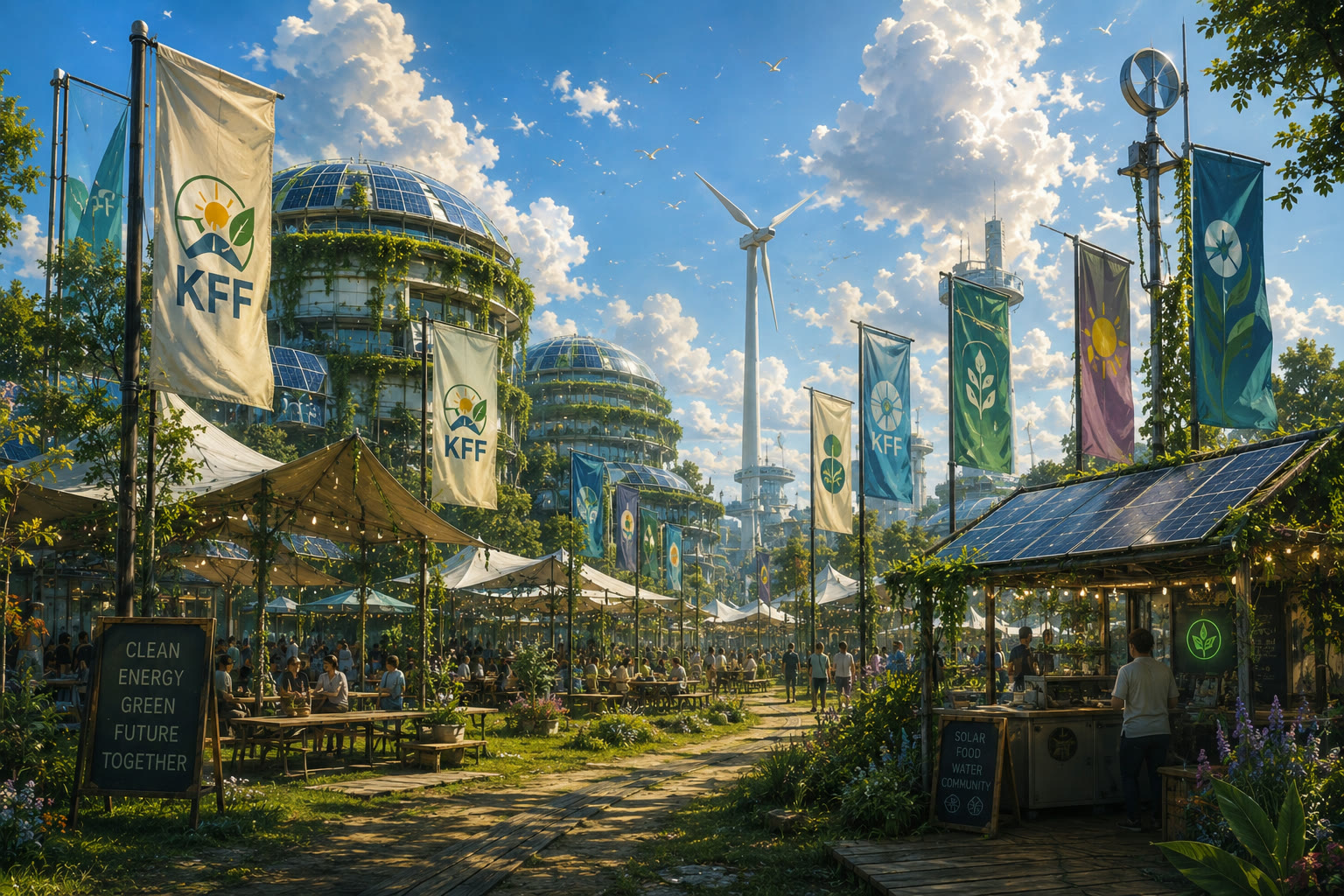
The New Internet Project exists to change that. Not to rebuild the whole internet overnight, but to begin a digital commons: a coordinated ecosystem of tools, protocols and communities that can progressively replace the extractive stack with one designed for trust, sovereignty, interoperability and systemic transformation. Symv.app, Pvlse.io and related tools already provide many of the building blocks.
The next internet should not be built around attention capture. It should be built around coordination.
The current internet is powerful. It gives us speed, reach, storage and scale. It also gives us fragmentation, noise, dependency, burnout and a quiet, constant extraction most people never see.
Most organisations now coordinate across a messy pile of disconnected apps. Each is useful on its own. Together, they don't add up to a coordination layer — they add up to a set of islands.
So the field keeps repeating the same conversations, losing the same opportunities, duplicating the same work, missing the same connections — and never building any ecosystem memory.
This is not about one app beating another — "we replace Notion", "we replace Zoom". It's about replacing the fragmented logic behind them. In a coordination stack, a document connects to a project, the project to its tasks, the tasks to people, people to circles, circles to decisions, decisions to capital, capital to diligence, diligence to the map — and action flows back into shared memory. One field, made legible to itself.
Type a tool you use right now. We'll show you the coordinated alternative inside Symviosis — and which layer it belongs to.
The whole fragmented stack collapses into eight macro layers. Each replaces a cluster of extractive tools — but the point isn't feature parity. It's that the layers read from the same field, so signal passes between them without translation loss.
Turn documents and notes into living, AI-navigable ecosystem memory.
Move talk out of endless streams and into structured, searchable community memory.
Connect conversations, meetings, decisions and work into one execution layer.
Shift from extracting leads to stewarding relationships over time.
Make power, ownership and decisions transparent and accountable.
Help capital move with better context, trust and systems-change intelligence.
Turn communities into learning, contribution and action systems.
AI grounded in the living memory of a field — not disconnected prompts.
Two stacks can have the same features and still be built for opposite ends. The difference isn't what the software does — it's the question it's optimised to answer.
This is the difference between building another app and building civilisational infrastructure — and it's why this belongs inside the Coordination Layer, not beside it.The New Internet Project · Plate NI · Positioning note
The tools already exist in partial form. The work now is to improve, extend and steward them with the community — because if this became one more closed company trying to own the future, it would reproduce the exact problem it set out to solve. Some parts may be commercial, some open, some held by foundations, some maintained by communities. The direction stays fixed: build digital infrastructure that serves the many, not the few.
The Coordination Layer needs physical, digital, financial and cultural infrastructure. The New Internet Project is the digital thesis — the tools through which the ecosystem can communicate, document, remember, map, govern, decide, fund, learn, build and coordinate. See it inside the four-layer stack →
The old internet connected information. The social internet connected people. The platform internet captured behaviour. The next internet has to coordinate action — for collective wellbeing and systems change. That's the whole purpose of the New Internet Project.